When my oldest daughter got her period at a relatively young age, the chorus came quickly—grandmas, aunties, everybody with a theory:
It’s the hormones in the food.
Hormones in the milk.
Hormones in the meat.
That’s what we grew up on, right? The idea that something external was speeding things up. That our kids’ bodies were being pushed ahead of their time by something added, something artificial.
And as puberty begins for my youngest… it feels like something else is accelerating.
So I started asking myself—is the new threat hormones online?
From What They Eat to What They Absorb
What concerns me now isn’t just what’s going into their bodies.
It’s also what’s constantly surrounding them.
Because if I’m being honest, the real shift I’ve watched over the years isn’t just physical. It’s emotional, social, and often psychological. The pressure to grow up doesn’t come from the same places it used to.
Back in the ’80s and ’90s, that pressure came from people you could point to. Kids at school. Older cousins. Maybe a magazine like Cosmo or YM that you weren’t quite supposed to be reading yet but somehow had access to anyway.
Those magazines taught girls how to be desirable before they even understood what desire meant. They sold beauty, relationships, and sex as if they were prerequisites for value.
And even back then, adults were worried. They said media was pushing things too far, too fast.
But there was still a kind of boundary.
You had to go get the magazine.
You had to flip the pages.
You had to choose to engage with it.
Now?
There’s no opting in. There isn’t even logging on.
Hormones in Social Media
Now it lives in the scroll.
What I’m starting to think of as hormones in social media. Not literal hormones, but constant stimulation. Content designed to pull at curiosity, attraction, validation… before kids even fully understand what those feelings are.
And it’s not just what they’re seeing anymore.
It’s what they’re interacting with.
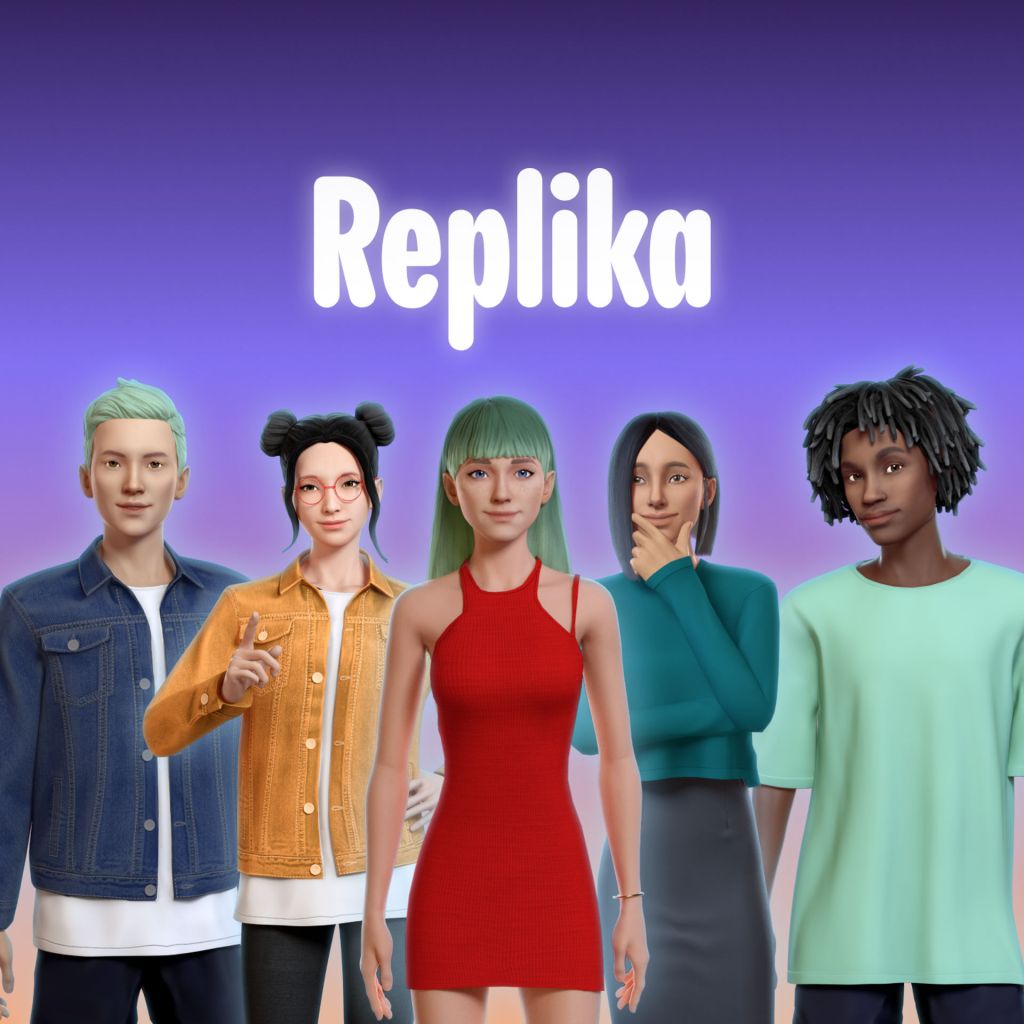
Platforms like Character.AI and Replika allow users to create relationships. Real-feeling conversations with digital partners who are always available, always affirming, always responsive.
Apps like Chai and Talkie AI take that even further, with fewer guardrails and more user-generated interactions that can drift into romantic or suggestive territory pretty quickly.
And then there’s TikTok—which isn’t building relationships directly, but it’s feeding the atmosphere around them.
One video turns into ten.
One “POV boyfriend” clip turns into a whole feed of them.
One anime edit turns into a steady stream of emotionally charged, romanticized content.
It’s not random.
It’s responsive.


The Anime Layer We Don’t Talk About Enough
And then there’s anime.
Now listen—I’m not here to bash anime. There’s creativity there, storytelling, culture. A lot of it is meaningful and worth engaging with.
But there’s also something happening visually that we don’t always stop to unpack.
Characters that look young—big eyes, soft features—paired with bodies and movements that are clearly coded as adult. Camera angles that linger just long enough. Scenes that don’t fully cross into explicit, but definitely don’t stay innocent either.
And when those clips get pulled onto social media, edited, looped, slowed down, set to music?
They hit different.
It doesn’t always register as sexual in a conscious way.
But it still stimulates.
What’s Actually Being Sold
And this is the part that shifted my thinking.
It’s not just sex being sold.
It’s stimulation itself.
The feeling of being desired.
The idea of a perfect partner.
The illusion of connection without effort or rejection.
AI companions don’t argue with you.
They don’t ignore you.
They don’t have boundaries unless they’re programmed to.
So what are we teaching our kids about relationships… without ever saying a word?
And on social media, it’s not just one version of this—it’s layers.
Validation through likes.
Attention through appearance.
Affection through performance.
And the algorithm? It watches. Learns. Adjusts.
If something holds your attention for three seconds longer, you’re getting more of it.
What Changed the Most: Access
This is the part that really separates our childhood from theirs.
It’s not just the content.
It’s the access.
Back then, there were limits. You had to go find something. There was a barrier, even if it was small.
Now?
It’s free.
It’s private.
It’s constant.
And it talks back.
Kids aren’t just consuming anymore—they’re participating. They’re forming attachments. They’re practicing interaction in spaces that don’t require reciprocity, patience, or real-world consequences.
And they’re doing it young.
Let’s Be Real—It’s Not All Bad
I want to be clear about something, because I think this matters.
This isn’t about demonizing technology.
There is so much good here.
Kids can learn faster. Create more. Connect across distance. Express themselves in ways we didn’t have access to. Platforms like TikTok have taught everything from history to mental health awareness in ways that actually reach them.
AI could be incredible for:
- emotional support
- creative collaboration
- learning and exploration
That potential is real.
But so is the gap between what these tools could be… and what they’re currently optimized for.
So What’s the Real Issue?
It’s not the existence of these platforms. It’s what they prioritize.
They are built to hold attention.
And the fastest way to hold attention is to tap into instinct—curiosity, attraction, validation.
So when we talk about “hormones in social media,” we’re not talking about something being added to our kids.
We’re talking about something being activated in them… over and over again… without pause.
Where That Leaves Us
And this is the uncomfortable part.Because it’s easy to blame social media.
And our kids didn’t build these systems. They’re responding to them.
Exactly as designed.
We used to worry about hormones in the milk.
Now they move through screens—
not injected, but suggested. Not consumed, but absorbed.
And maybe the question isn’t just what our kids are taking in.
Maybe it’s what’s been designed…
to take hold of them.






 Disappearing Sidewalks